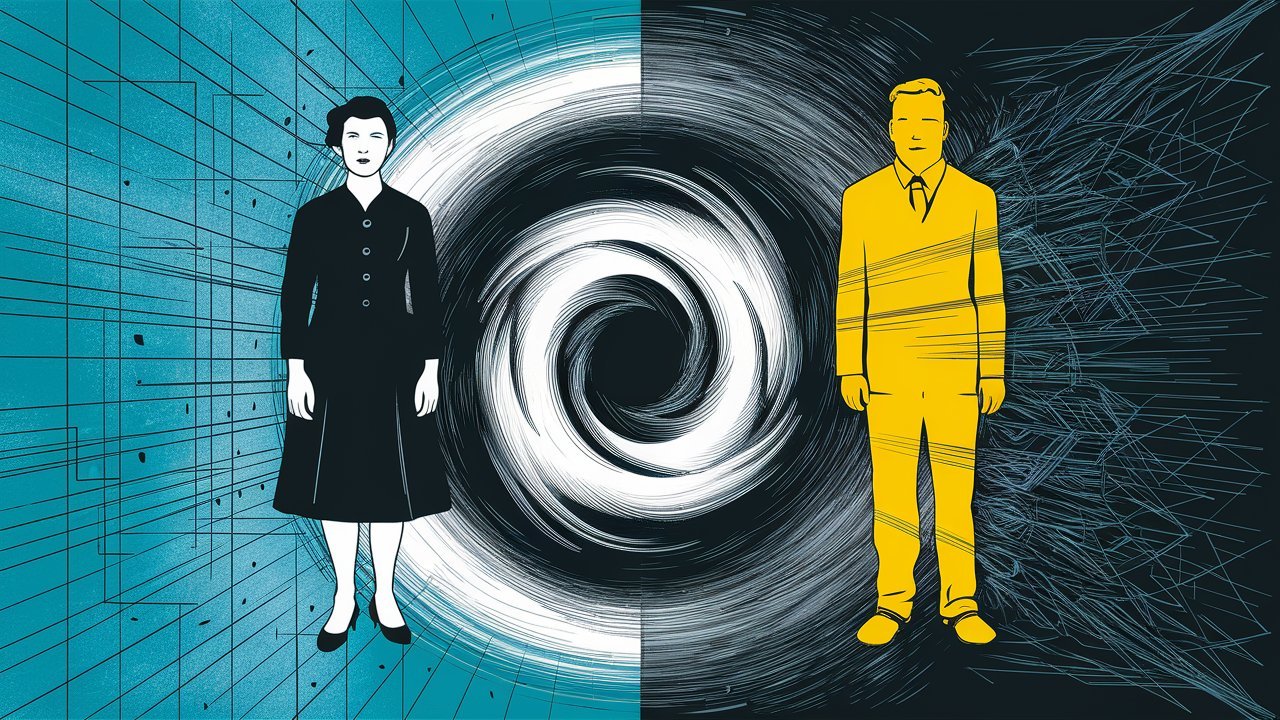
Language often introduces new or unfamiliar words that spark curiosity and invite deeper exploration. Some terms become widely recognized because they capture complex ideas or patterns that appear in many areas of life, science, and philosophy. One such intriguing term is “dichosity.”
Although not yet widely established in mainstream dictionaries, the structure of the word dichosity suggests a connection to ideas of division, contrast, or dual nature. Many terms that begin with the prefix “dicho-” originate from the Greek word “dicha,” which means “in two” or “divided into parts.” This linguistic foundation hints that dichosity may relate to concepts involving dual perspectives, contrasting elements, or two interconnected components.
The concept of duality is deeply rooted in human thinking. Throughout history, philosophers, scientists, and scholars have explored the relationship between opposing forces, complementary systems, and balanced contrasts. Whether discussing light and darkness, order and chaos, or logic and emotion, the idea of two interconnected elements shaping a broader reality appears in many disciplines.
This article explores the possible meaning of dichosity, its conceptual background, how similar ideas appear in philosophy and science, and why understanding dual perspectives can help us better interpret the world around us.
What Does Dichosity Mean?
The word dichosity appears to derive from the linguistic structure associated with division into two parts or opposing elements. The prefix “dicho-” suggests separation or duality, while the suffix “-osity” often describes a state, quality, or condition.
Based on this structure, dichosity can be interpreted as the state or condition of having two contrasting or complementary aspects. In many contexts, this idea reflects situations where two elements coexist, interact, or influence one another.
Examples of conceptual duality appear in many areas of thought:
-
Nature: day and night, land and sea
-
Philosophy: mind and body, reason and emotion
-
Science: particle and wave behavior in physics
-
Human behavior: logic and intuition
In each case, two elements interact to create a balanced system or dynamic relationship, illustrating the concept that could be described as dichosity.
The Role of Duality in Human Thinking
Human understanding often relies on recognizing patterns of contrast and balance. Dual relationships help people analyze complex ideas by dividing them into two complementary components.
For example, many philosophical traditions emphasize the importance of balance between opposing forces. These ideas suggest that reality is shaped by the interaction of contrasting elements rather than by a single dominant factor.
In everyday life, people frequently encounter situations where two perspectives or forces must be considered simultaneously. Recognizing this kind of dual structure helps individuals make better decisions and understand complex issues more clearly.
The concept of dichosity may therefore represent the broader idea that many systems in the world operate through balanced contrasts.
Dichosity in Philosophy and Abstract Thought
Philosophy has long explored ideas that resemble the concept of dichosity. Many philosophical theories analyze the world through pairs of opposing or complementary elements.
For instance, philosophers often examine relationships such as:
-
Freedom and responsibility
-
Order and chaos
-
Individual and society
-
Knowledge and belief
These conceptual pairs reveal how understanding one element often requires examining its opposite. The interaction between two perspectives creates a deeper understanding of complex ideas.
The concept of dichosity aligns with this philosophical approach by emphasizing the coexistence of contrasting yet interconnected components.
Examples of Dichosity in Science
Science also provides many examples of systems that function through dual structures or complementary forces.
In physics, for example, light demonstrates both wave-like and particle-like behavior, a phenomenon often described as wave–particle duality. This illustrates how a single phenomenon can possess two different yet interconnected characteristics.
Biology offers another example through genetic inheritance, where traits are influenced by two sets of genetic information. Similarly, ecosystems often rely on balanced relationships between predators and prey, illustrating how two opposing forces can maintain environmental stability.
These examples show that dual relationships are not merely philosophical ideas; they are also fundamental principles that shape natural systems.
Dichosity in Social and Cultural Contexts
Human societies frequently encounter situations where multiple perspectives or opposing viewpoints must coexist. Political discussions, cultural debates, and ethical questions often involve contrasting ideas that influence each other.
For example, societies often balance values such as:
-
Innovation and tradition
-
Individual freedom and collective responsibility
-
Economic growth and environmental protection
Recognizing the dichosity of these issues allows communities to approach challenges with a more nuanced understanding rather than viewing them as simple conflicts.
This perspective encourages dialogue, compromise, and balanced solutions.
Why Understanding Dual Perspectives Matters
Recognizing the presence of dual elements within systems or ideas can improve critical thinking and decision-making. When people acknowledge that situations may contain two valid perspectives, they become better equipped to analyze complex problems.
Understanding dichosity helps individuals:
-
Evaluate issues from multiple viewpoints
-
Recognize the balance between opposing forces
-
Develop more thoughtful and informed solutions
-
Appreciate the complexity of natural and social systems
By considering both sides of a concept, people can gain a deeper and more balanced understanding of reality.
The Relevance of Dichosity in Modern Discussions
In a rapidly changing world, many issues require balanced thinking and the ability to consider multiple perspectives simultaneously. Technological development, environmental challenges, and global communication all involve situations where different interests and ideas intersect.
The concept of dichosity reminds us that progress often comes from understanding how contrasting elements interact rather than eliminating one side of the equation.
This approach encourages collaboration, innovation, and thoughtful analysis, making it increasingly relevant in modern discussions about science, society, and human development.
Conclusion
The concept of dichosity reflects the powerful idea that many aspects of reality are shaped by the interaction of two complementary or opposing elements. Whether in philosophy, science, or everyday life, dual relationships often reveal deeper insights into how systems function and evolve.
By recognizing the presence of balanced contrasts within complex ideas, individuals can develop a more comprehensive understanding of the world around them. The notion of dichosity highlights the importance of examining multiple perspectives and appreciating the dynamic relationships that shape both natural and human systems.
As intellectual curiosity continues to expand, exploring concepts like dichosity helps encourage thoughtful reflection, balanced reasoning, and deeper exploration of the patterns that define our universe.
Frequently Asked Questions (FAQ)
What does dichosity mean?
Dichosity refers to a state of duality or the presence of two contrasting or complementary elements within a system or concept.
Is dichosity related to duality?
Yes. The concept of dichosity is closely connected to duality, which describes the interaction between two opposing or complementary forces.
Where can the idea of dichosity appear?
The concept can appear in philosophy, science, social discussions, and natural systems, where two elements interact to shape outcomes.
Why is understanding dual perspectives important?
Considering multiple perspectives allows people to analyze complex issues more effectively and develop balanced solutions.
Can dichosity apply to everyday life?
Yes. Many real-world situations involve balancing two different viewpoints or influences, making the concept relevant in daily decision-making and problem-solving.