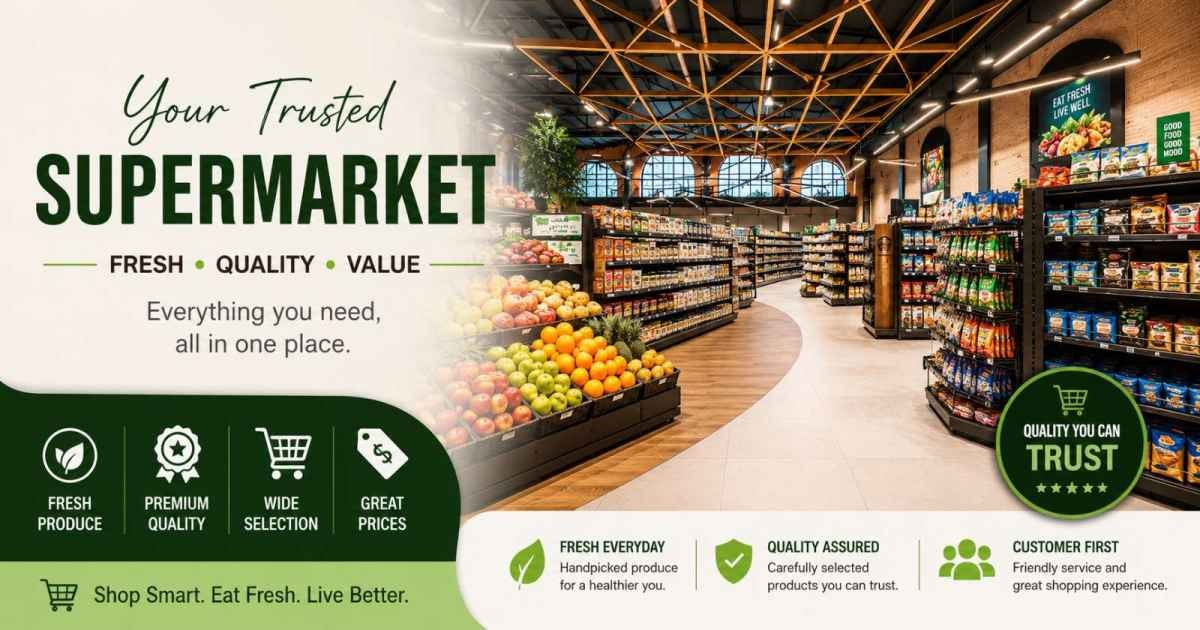
A supermarket is one of the most important and familiar parts of modern everyday life, providing consumers with convenient access to food, household essentials, personal-care products, beverages, fresh produce, and many other items in one location. Unlike small grocery stores that may specialize in a limited selection of products, supermarkets generally offer a much wider range of goods arranged across different departments and aisles. Customers can purchase fresh fruit and vegetables, meat and seafood, dairy products, bakery items, packaged foods, frozen products, cleaning supplies, toiletries, and other household necessities during a single shopping trip. The modern supermarket has also evolved beyond the traditional physical store, with many businesses now offering online ordering, home delivery, click-and-collect services, loyalty programs, self-checkout systems, digital coupons, and personalized promotions. Because supermarkets serve such a broad range of consumer needs, understanding how they operate and how to shop efficiently can help people save time, manage household budgets, and make more informed purchasing decisions.
The role of the supermarket has changed significantly over time as consumer expectations, technology, competition, and shopping habits have developed. Today’s shoppers may compare prices through mobile apps, create digital shopping lists, order groceries online, use self-service checkout machines, or receive personalized discounts based on their shopping history. At the same time, supermarkets are responding to growing interest in healthier foods, locally produced goods, environmentally responsible packaging, food waste reduction, and sustainable supply chains.
What Is a Supermarket?
A supermarket is a large retail store that sells a wide variety of food and everyday household products under one roof. The typical supermarket is organized into departments or aisles, allowing customers to find different categories of products efficiently. Common areas include fresh produce, meat, seafood, dairy, bakery, frozen foods, canned goods, snacks, beverages, household cleaning products, personal-care items, and prepared foods. Some larger supermarkets also include pharmacies, cafés, florists, banking services, fuel stations, clothing sections, electronics, or other retail departments.
The defining characteristic of a supermarket is convenience through variety. Instead of visiting separate shops for bread, milk, vegetables, cleaning supplies, and packaged foods, consumers can purchase many of these necessities during one trip. Supermarkets also use product placement, promotions, store layouts, pricing strategies, and loyalty programs to make shopping more convenient and encourage customers to discover additional products. This combination of product variety and convenience has made the supermarket an essential part of retail systems in many countries.
How Does a Supermarket Work?
A supermarket operates through a complex combination of purchasing, logistics, inventory management, merchandising, staffing, technology, and customer service. Products typically move through a supply chain that may begin with farmers, manufacturers, processors, wholesalers, or distributors before reaching a supermarket’s distribution center or store. Once products arrive, employees or automated systems manage inventory, replenish shelves, monitor expiration dates, maintain refrigerated areas, and ensure that products are available for customers.
Pricing is another important part of supermarket operations. Stores must consider supplier costs, transportation, labor, rent, utilities, competition, demand, promotions, and other operating expenses when determining retail prices. Perishable products require especially careful inventory management because supermarkets must balance having enough stock available for customers with reducing waste caused by products expiring before they are sold. Modern inventory systems can help stores monitor sales patterns and predict how much stock may be needed at different times.
Types of Supermarkets
There are several types of supermarkets, and the exact format varies by country and market. Traditional supermarkets generally focus on groceries and household necessities, while larger hypermarkets combine grocery products with extensive non-food merchandise. Discount supermarkets typically operate with a more limited selection and emphasize competitive prices, efficient store layouts, and lower operating costs. Premium supermarkets, by contrast, may focus on specialty foods, imported products, organic choices, prepared meals, and a more upscale shopping environment.
There are also neighborhood supermarkets designed for convenience and frequent shopping trips. These stores may have smaller floor areas but focus on products that consumers commonly need, such as milk, bread, eggs, beverages, snacks, fresh produce, and household basics. Online supermarkets represent another important category, allowing shoppers to browse products through websites or mobile applications and receive groceries through delivery or collect them from designated pickup locations. Each format serves a slightly different combination of price, convenience, product variety, and shopping experience.
Supermarket Departments
A typical supermarket is divided into departments so customers can locate products more easily. The fresh produce section usually contains fruits, vegetables, herbs, and sometimes prepared salads or fresh juices. The dairy department commonly includes milk, yogurt, cheese, butter, cream, and other refrigerated products. Meat and seafood sections may provide fresh or packaged cuts, while the bakery department can offer bread, pastries, cakes, and other baked goods. Frozen-food aisles contain frozen vegetables, meals, desserts, meat products, and other items designed for longer storage.
Packaged grocery aisles generally contain products such as rice, pasta, cereals, flour, sugar, cooking oils, canned foods, sauces, spices, snacks, and beverages. Supermarkets may also dedicate space to household cleaning products, laundry supplies, paper goods, toiletries, cosmetics, pet supplies, and personal-care products. Larger stores can have additional departments for pharmacy items, prepared meals, flowers, clothing, electronics, or seasonal merchandise. Understanding the basic supermarket layout can make shopping faster, particularly when customers organize their lists according to departments.
Fresh Food in a Supermarket
Fresh food is one of the most important categories in a modern supermarket. Supermarkets must maintain appropriate storage temperatures and handling procedures for perishable products while also managing inventory carefully to minimize spoilage.
Consumers can also benefit from understanding how fresh-food departments work. Comparing quality, package sizes, prices per unit, seasonal availability, and expiration or best-before information can make shopping more effective. In the produce section, shoppers may look for fruits and vegetables that are appropriate for their planned meals rather than purchasing large quantities that could go unused. Good planning can reduce both household spending and food waste.
Supermarket Prices and Discounts
Supermarket prices can vary considerably depending on the store, brand, package size, location, season, and promotional strategy. One supermarket may have a lower price on a particular product while another may offer a better price on a different category. This is why comparing individual products rather than assuming that one store is always cheaper can be useful for budget-conscious shoppers.
Discounts and promotions are a major part of supermarket retail. Stores may offer temporary price reductions, multi-buy promotions, loyalty discounts, digital coupons, clearance prices, or special offers on selected products. However, shoppers should evaluate whether a promotion actually provides value. Buying a larger quantity at a discount is not necessarily cheaper if the product will not be used before it expires. Checking the unit price can also provide a more meaningful comparison than looking only at the total package price.
How to Save Money at the Supermarket
Saving money at the supermarket starts before entering the store. Creating a shopping list based on planned meals and existing household supplies can reduce impulse purchases and prevent unnecessary duplication. Consumers can also compare brands, check unit prices, use legitimate coupons and loyalty discounts, and consider store-brand alternatives when the quality and specifications meet their needs. Planning purchases around seasonal produce can sometimes provide additional value because products may be more readily available during their peak growing periods.
Another useful strategy is to distinguish between needs and impulse purchases. Supermarkets are carefully designed environments in which product displays, promotional signs, attractive packaging, and checkout-area merchandise can influence purchasing behavior. A shopper who enters with a clear budget and prioritized list is generally better positioned to avoid spending more than intended. Buying in bulk can also be helpful for suitable non-perishable items, but it should be approached carefully for products with short shelf lives.
Supermarket Store Brands
Many supermarkets offer store-brand products, sometimes called private-label products. These goods are produced for or sold under a retailer’s own brand rather than a nationally recognized manufacturer brand. Store brands can cover almost every category, including dairy, canned foods, snacks, cleaning products, personal-care products, paper goods, and household essentials.
Store brands can provide consumers with another option when comparing price and quality. Some shoppers prefer well-known brands because of familiarity or specific product characteristics, while others find store brands offer comparable value at a lower price. The best choice depends on the individual product, ingredients, quality requirements, package size, and price per unit. Rather than automatically choosing either a national brand or a store brand, shoppers can compare the specific products they actually need.
Supermarket Loyalty Programs
A supermarket loyalty program rewards customers for shopping with a particular retailer. Depending on the supermarket, members may receive personalized discounts, points, digital coupons, promotional offers, fuel rewards, or other benefits. Loyalty programs have become increasingly digital, with customers often accessing offers through a mobile application or online account.
For consumers, loyalty programs can provide meaningful savings when the discounts apply to products they already intend to purchase. However, shoppers should avoid purchasing unnecessary products solely to earn points or qualify for a promotion. The most useful loyalty strategy is to treat rewards as an additional benefit rather than allowing the program to determine what you buy.
Online Supermarket Shopping
Online supermarket shopping has become an important alternative to visiting a physical store. Customers can search for products through a website or app, add items to a virtual basket, choose a delivery window or pickup option, and pay electronically. Online grocery shopping can be particularly convenient for people who want to save time or avoid traveling to a store.
One advantage of online shopping is that customers can see their running total while building their order, which can make budget management easier. Digital platforms may also make it simple to compare brands and package sizes. However, online grocery shopping has its own challenges, including delivery charges, substitutions, unavailable products, and the inability to personally inspect fresh items before purchase. Understanding these differences can help shoppers decide when online ordering is more convenient than an in-person trip.
Supermarket Self-Checkout
Self-checkout has become increasingly common in supermarkets. Instead of having a cashier scan every item, customers scan products themselves and complete payment through an automated checkout station. Self-checkout can reduce waiting times during certain periods and provides customers with another checkout option.
However, self-checkout systems also require customers to follow the store’s procedures carefully. Age-restricted products, weighted items, produce codes, payment issues, and unexpected scanning problems may require employee assistance. Supermarkets continue to experiment with different checkout technologies as they attempt to balance convenience, operational efficiency, customer preferences, and loss prevention.
Supermarket Technology
Technology plays a major role in the modern supermarket. Digital price labels, inventory-management systems, self-checkout machines, mobile apps, electronic coupons, online ordering platforms, automated warehouses, and data-analysis tools can all influence how a supermarket operates. These technologies allow retailers to monitor stock, analyze customer demand, improve product availability, and create more personalized shopping experiences.
Technology can also change the physical shopping experience. Some stores are experimenting with cashierless systems, smart carts, digital navigation tools, electronic receipts, and automated fulfillment systems. As technology continues to develop, supermarkets are likely to combine physical stores with increasingly sophisticated digital services rather than treating online and offline shopping as completely separate experiences.
Healthy Shopping at the Supermarket
A supermarket gives shoppers access to a wide range of foods, but having many choices can sometimes make decision-making difficult. A practical approach is to enter the store with a meal plan and focus on the foods needed to prepare balanced meals. Fresh fruits and vegetables, appropriate protein sources, grains, dairy or alternatives, and other foods can be selected according to individual dietary requirements and preferences.
Reading product labels can also help shoppers make informed decisions. Nutrition information, ingredient lists, serving sizes, allergens, storage instructions, and expiration or best-before information can provide useful information. Rather than relying solely on packaging claims, consumers can examine the actual information on the product and choose foods that fit their individual needs.
Sustainable Supermarkets
Sustainability has become an increasingly important issue for the supermarket industry. Supermarkets can influence environmental outcomes through packaging choices, energy use, refrigeration systems, transportation, food-waste reduction, recycling programs, and sourcing practices. Because supermarkets purchase and sell enormous quantities of products, even relatively small changes can have significant effects when implemented at scale.
Food waste is another important issue. Supermarkets may use markdowns, improved inventory forecasting, donations, and better storage practices to reduce products being discarded before they are sold. Consumers also play a role by planning purchases, storing food properly, understanding date labels, and using leftovers effectively. Sustainable supermarket shopping is therefore a shared responsibility involving retailers, suppliers, and customers.
Supermarket Shopping Tips
The best supermarket shopping tips are generally simple but effective. Make a list before shopping, check what you already have at home, set a realistic budget, compare unit prices, and avoid buying quantities that are unlikely to be used. Organizing the shopping list by supermarket department can also reduce the amount of time spent walking through the store.
It can also be useful to compare prices across different supermarkets when purchasing expensive or frequently purchased items. Consider store brands where appropriate, use loyalty discounts for products you genuinely need, and pay attention to seasonal pricing. Most importantly, do not assume that every advertised promotion represents a genuine saving. A discount only provides value when the product is something you actually need and the final price compares favorably with alternatives.
Supermarket vs. Grocery Store
The terms supermarket and grocery store are sometimes used interchangeably, but they can describe different retail formats. A supermarket generally has a larger floor area and broader selection, often combining fresh food, packaged groceries, household products, personal-care items, and other categories. A smaller grocery store may focus primarily on essential food products and everyday necessities.
The distinction is not always strict because retail formats vary from one country and region to another. Some neighborhood grocery stores can have extensive product ranges, while some supermarkets may be relatively compact. The important difference is usually the combination of store size, product variety, departments, services, and shopping model.
The Future of Supermarkets
The future of supermarkets is likely to be shaped by technology, changing consumer expectations, sustainability, and the continuing growth of online shopping. Physical supermarkets are unlikely to disappear simply because online grocery services are available. Instead, stores may increasingly function as a combination of shopping destination, pickup center, fulfillment location, and community retail space.
Artificial intelligence and advanced data systems may improve demand forecasting, inventory management, personalized offers, and supply-chain efficiency. At the same time, consumers may expect faster delivery, more transparent product information, environmentally responsible packaging, and easier digital shopping experiences.
Frequently Asked Questions About Supermarkets
What is a supermarket?
A supermarket is a large retail store that sells a broad range of food, beverages, household products, personal-care items, and other everyday necessities. Products are typically organized into departments and aisles for convenient shopping.
What can you buy at a supermarket?
A supermarket commonly sells fresh fruits and vegetables, meat, seafood, dairy products, bakery goods, frozen foods, canned goods, snacks, beverages, cleaning supplies, toiletries, paper products, pet supplies, and other household essentials. Larger supermarkets may offer additional services and non-food products.
What is the difference between a supermarket and a grocery store?
A supermarket generally offers a wider selection of products and departments than a smaller grocery store. However, the terminology varies by country and retailer, so there is no universal boundary between the two formats.
How can I save money at the supermarket?
You can save money by preparing a shopping list, planning meals, comparing unit prices, considering store brands, using legitimate discounts and loyalty offers, avoiding unnecessary impulse purchases, and buying appropriate products in quantities you will actually use.
Is supermarket shopping online cheaper?
Online supermarket shopping is not automatically cheaper than shopping in person. Online services can make price comparison and budget tracking easier, but delivery charges, service fees, minimum-order requirements, and product substitutions can affect the final cost.
What is a supermarket loyalty program?
A supermarket loyalty program is a customer-rewards system that may provide discounts, points, digital coupons, special offers, or other benefits to registered shoppers. The exact rewards vary by retailer.
What is a supermarket store brand?
A supermarket store brand is a product sold under the retailer’s own brand name or private label. Store brands are available across many categories and often provide shoppers with an alternative to national brands.
Are supermarket promotions always cheaper?
No. A promotion may reduce the price of an individual item, but shoppers should compare the final price and unit price with competing products. Buying something solely because it is discounted is not necessarily a saving if the product is unnecessary.
What is self-checkout in a supermarket?
Self-checkout allows customers to scan and pay for their own purchases using an automated checkout station. Employees are usually available to assist with problems or transactions requiring verification.
How are supermarkets becoming more sustainable?
Supermarkets can improve sustainability through reducing food waste, improving energy efficiency, optimizing transportation, reducing unnecessary packaging, supporting responsible sourcing, and offering recycling or reusable-packaging initiatives.
Why are supermarkets important?
Supermarkets provide consumers with convenient access to a broad range of food and household necessities in one location. They also play an important role in supply chains by connecting producers and manufacturers with consumers.
What should I check before buying food at a supermarket?
Check the product’s price, package size, ingredients, nutrition information, allergens, storage requirements, and relevant date information. Comparing similar products can help you choose the option that best fits your needs and budget.
Conclusion
The supermarket has evolved from a simple grocery-shopping destination into a sophisticated retail environment that combines food, household products, technology, customer services, digital shopping, and increasingly important sustainability initiatives. For consumers, supermarkets offer the convenience of finding many everyday necessities in one place, while modern features such as loyalty programs, online ordering, self-checkout, digital coupons, and home delivery provide additional ways to shop. Understanding how supermarket departments, prices, promotions, store brands, and services work can help shoppers make better purchasing decisions and use their time and money more effectively.