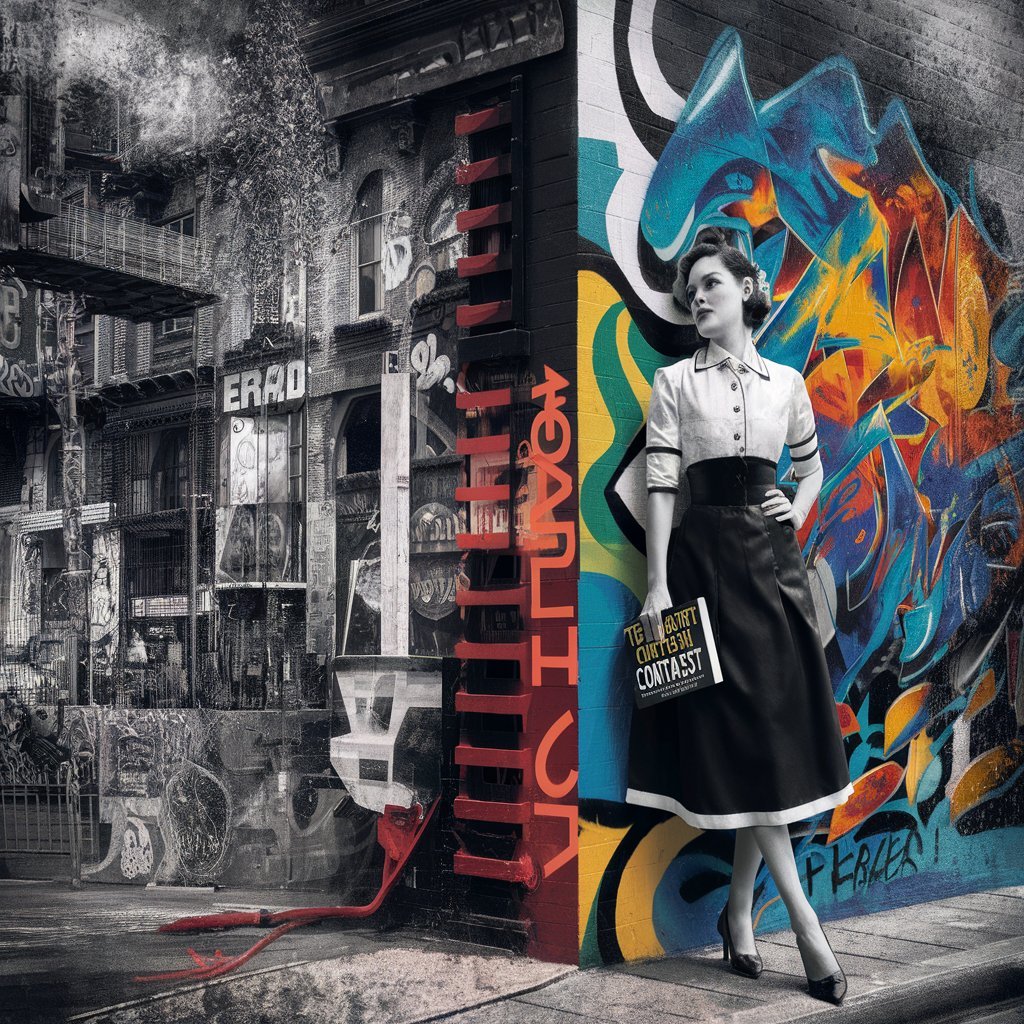
The concept of juxtaposition lies at the heart of creativity, storytelling, and artistic expression. Derived from the Latin roots juxta (meaning “next to”) and positio (meaning “placement”), juxtaposition refers to the act of placing two or more elements side by side to highlight their differences, similarities, or unexpected relationships. Whether used in literature, visual art, film, or music, juxtaposition is a powerful creative technique that deepens meaning, evokes emotion, and challenges perception.
In literary devices, juxtaposition is often used to create contrast between characters, settings, or ideas, revealing hidden truths or emphasizing thematic tension. In visual art, it manifests through the deliberate placement of contrasting colors, textures, or subjects to provoke thought and engage the viewer. Across all creative disciplines, juxtaposition serves as a bridge between opposites—light and dark, beauty and decay, chaos and order—inviting audiences to explore complexity and contradiction.
This article explores the meaning, purpose, and impact of juxtaposition as a literary device and artistic technique, offering detailed insights, examples, and applications that demonstrate how contrast can transform ordinary works into extraordinary expressions of creativity.
What Is Juxtaposition? Definition and Core Concept
Juxtaposition is the deliberate placement of two contrasting elements close together to highlight their differences or create a new, layered meaning. It is not merely about opposition but about interaction—the way two distinct ideas, images, or emotions influence each other when brought into proximity.
In literature, juxtaposition often appears in the form of contrasting characters, settings, or themes. For example, a writer might place a scene of innocence next to one of corruption to emphasize moral decay. In art, juxtaposition can be visual, such as the combination of bright and muted colors or the placement of modern objects within classical compositions.
The power of juxtaposition lies in its ability to engage the audience’s intellect and emotions simultaneously. By forcing viewers or readers to reconcile opposing elements, it encourages deeper reflection and interpretation. This creative technique transforms simple contrasts into profound statements about human experience, society, and perception.
Juxtaposition as a Literary Device
In literature, juxtaposition is one of the most effective literary devices for creating tension, irony, and thematic depth. Authors use it to draw attention to differences between characters, highlight moral dilemmas, or underscore the complexity of human nature.
For instance, Charles Dickens frequently employed juxtaposition to critique social inequality. In A Tale of Two Cities, the famous opening line—“It was the best of times, it was the worst of times”—immediately establishes a contrast that defines the novel’s exploration of duality and revolution. Similarly, Shakespeare’s plays are rich with juxtaposition examples, such as the interplay between love and hate in Romeo and Juliet or ambition and guilt in Macbeth.
Through juxtaposition in literature, writers can reveal irony, expose hypocrisy, or evoke empathy. The technique allows readers to see the world through multiple lenses, deepening their understanding of characters and themes. It also enhances narrative rhythm, as alternating scenes of light and darkness, joy and sorrow, or peace and conflict create emotional balance and dramatic momentum.
Juxtaposition in Art: The Visual Power of Contrast
In visual art, juxtaposition is a fundamental artistic technique used to create visual tension, harmony, or surprise. Artists employ contrast in art to challenge perception and provoke emotional responses. By placing opposing elements side by side—such as rough and smooth textures, warm and cool colors, or realistic and abstract forms—they invite viewers to engage more deeply with the artwork.
Surrealist artists like Salvador Dalí and René Magritte mastered visual juxtaposition by combining ordinary objects in extraordinary ways. Dalí’s melting clocks in The Persistence of Memory juxtapose the rigidity of time with the fluidity of dreams, while Magritte’s The Son of Man contrasts the familiar (a man in a suit) with the surreal (an apple obscuring his face). These juxtaposition examples demonstrate how contrast can evoke curiosity, discomfort, and wonder simultaneously.
In contemporary art, juxtaposition continues to be a powerful tool for social commentary. Street artists, photographers, and digital creators use it to highlight inequality, cultural diversity, and environmental issues. By placing conflicting images or ideas together, they force audiences to confront contradictions within society and within themselves.
The Technique of Juxtaposition in Creative Expression
The juxtaposition technique is not limited to literature and art—it extends to film, music, advertising, and design. In cinema, directors use juxtaposition through editing and composition to create emotional or thematic contrast. For example, in Schindler’s List, Steven Spielberg juxtaposes scenes of brutality with moments of compassion to emphasize the moral complexity of humanity.
In music, composers juxtapose contrasting melodies, rhythms, or instruments to create dynamic tension and emotional depth. Similarly, in advertising, marketers use juxtaposition to capture attention—pairing luxury products with minimalist backgrounds or combining humor with serious messages to make campaigns more memorable.
The juxtaposition technique thrives on surprise and contradiction. It challenges audiences to think critically, question assumptions, and find meaning in contrast. Whether through words, images, or sounds, juxtaposition transforms creative works into multidimensional experiences that resonate long after the initial encounter.
Juxtaposition Examples Across Different Mediums
1. Juxtaposition in Literature
- George Orwell’s 1984 – The Party’s slogan “War is peace. Freedom is slavery. Ignorance is strength.” uses juxtaposition to expose political manipulation and irony.
- William Blake’s Songs of Innocence and Experience – The poet contrasts purity and corruption to explore the duality of human nature.
- F. Scott Fitzgerald’s The Great Gatsby – The glittering world of wealth is juxtaposed with moral emptiness, revealing the illusion of the American Dream.
2. Juxtaposition in Art
- Salvador Dalí’s The Persistence of Memory – The melting clocks juxtapose time’s rigidity with dreamlike fluidity.
- Banksy’s Street Art – Modern graffiti juxtaposes humor with political critique, blending rebellion and artistry.
- Pablo Picasso’s Cubism – Juxtaposition of geometric shapes and fragmented perspectives challenges traditional representation.
3. Juxtaposition in Film and Media
- Stanley Kubrick’s A Clockwork Orange – Violent scenes paired with classical music create disturbing emotional contrast.
- Disney’s The Lion King – The circle of life juxtaposes death and rebirth, illustrating nature’s balance.
- Advertising Campaigns – Contrasting imagery, such as luxury and simplicity, is used to evoke aspiration and desire.
These juxtaposition examples demonstrate how contrast can be used across mediums to evoke emotion, provoke thought, and communicate complex ideas.
Why Juxtaposition Matters in Creative Work
The significance of juxtaposition lies in its ability to reveal truth through contrast. By placing opposites side by side, creators expose hidden relationships and challenge audiences to see beyond the surface. This literary and artistic device encourages critical thinking, emotional engagement, and aesthetic appreciation.
In a world saturated with information, juxtaposition cuts through monotony by surprising and engaging the audience. It transforms ordinary subjects into extraordinary experiences, making art, literature, and media more impactful. Whether used to highlight irony, emphasize conflict, or celebrate diversity, juxtaposition remains one of the most versatile and enduring tools in creative expression.
Conclusion
Juxtaposition is more than a stylistic choice—it is a lens through which artists and writers explore the complexities of life. As a literary device and artistic technique, it harnesses the power of contrast to reveal meaning, emotion, and truth. From the pages of classic literature to the canvases of modern art, juxtaposition continues to shape how we perceive and interpret the world around us.By mastering the juxtaposition technique, creators can craft works that resonate on multiple levels—intellectually, emotionally, and visually. In every form of expression, from storytelling to design, juxtaposition reminds us that beauty often lies in contradiction, and understanding emerges from contrast.
Frequently Asked Questions (FAQ)
1. What is juxtaposition?
Juxtaposition is the placement of two contrasting elements side by side to highlight their differences or create new meaning.
2. How is juxtaposition used as a literary device?
In literature, juxtaposition contrasts characters, settings, or ideas to emphasize themes, create irony, or evoke emotion.
3. What is visual juxtaposition in art?
Visual juxtaposition involves placing contrasting colors, textures, or subjects together in a composition to create tension or harmony.
4. Can juxtaposition be used in film and music?
Yes, filmmakers and musicians use juxtaposition to create emotional contrast, such as pairing joyful music with tragic scenes.
5. What are some famous examples of juxtaposition in literature?
Examples include Dickens’s A Tale of Two Cities, Orwell’s 1984, and Shakespeare’s Romeo and Juliet.
6. Why is juxtaposition important in creative work?
It enhances meaning, provokes thought, and engages audiences by revealing complexity through contrast.
7. How does juxtaposition differ from irony?
While both involve contrast, juxtaposition focuses on placement and comparison, whereas irony relies on contradiction between expectation and reality.
8. What is the juxtaposition technique in art?
It’s the deliberate use of contrasting visual elements—such as light and dark, modern and traditional—to create impact and meaning.
9. How can writers use juxtaposition effectively?
Writers can place opposing ideas or scenes close together to highlight conflict, irony, or transformation.
10. What is the purpose of juxtaposition in creative expression?
The purpose is to deepen understanding, evoke emotion, and challenge perception by revealing the interplay between opposites.